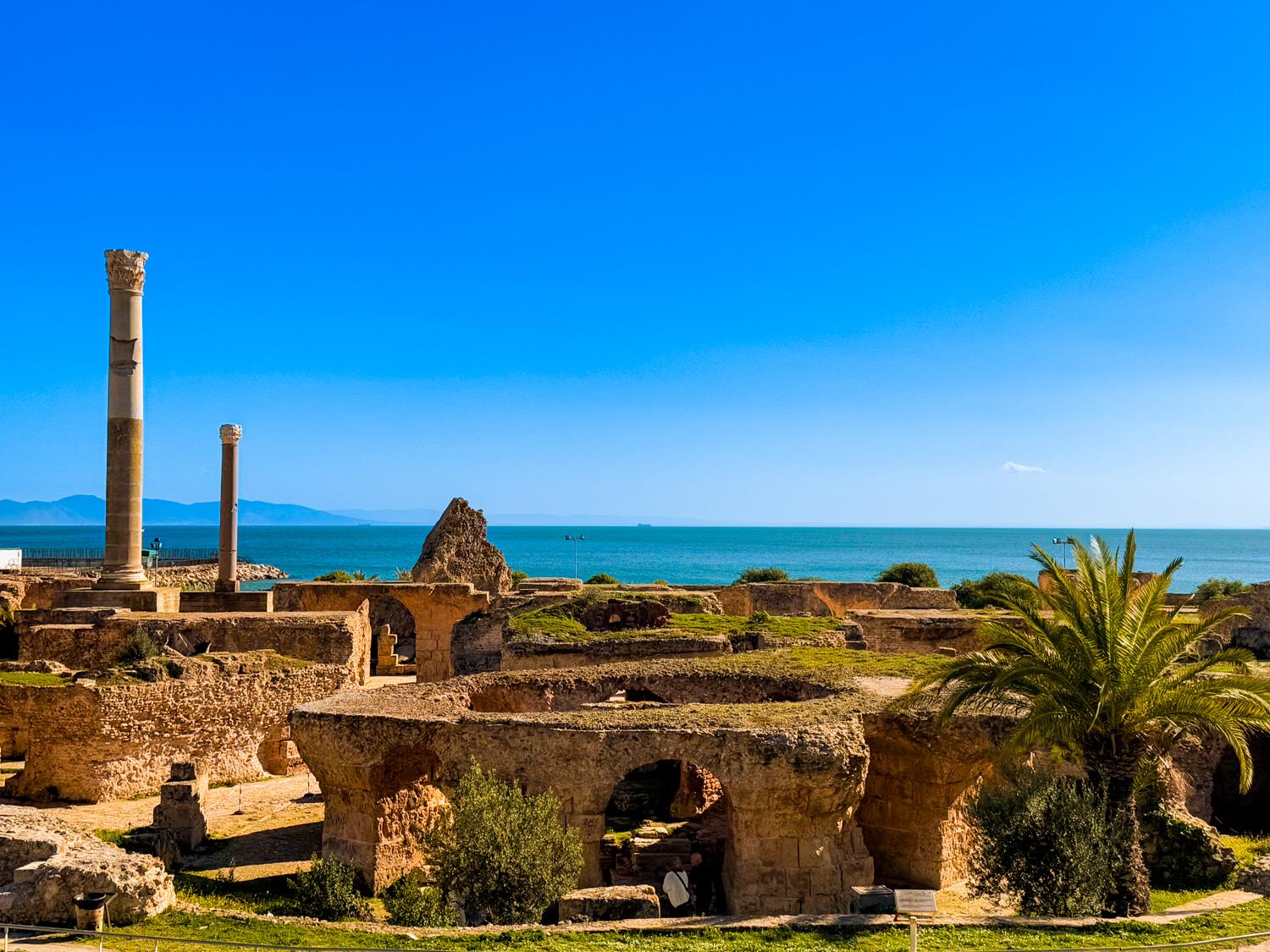
Tunisia is a country of striking contrasts, where golden Mediterranean beaches meet ancient Roman ruins, traditional markets fill narrow streets with colour and fragrance, and vast Saharan dunes stretch towards the horizon. Situated in North Africa between Algeria and Libya, the country offers travellers an opportunity to explore centuries of history, distinctive cultural traditions and landscapes that change dramatically from coast to desert.
Although Tunisia is often associated with beach holidays, its appeal extends far beyond its coastline. From the historic streets of Tunis to the ancient ruins of Carthage and the desert settlements of the south, the country provides a varied travel experience for visitors interested in history, architecture, food and adventure.
The capital, Tunis, offers a glimpse into the country’s rich cultural heritage. Its historic medina, recognised as a UNESCO World Heritage Site, is a maze of narrow streets, traditional shops, mosques and courtyards. Visitors can explore markets selling handmade ceramics, leather goods, textiles and spices, while cafés provide places to pause and experience the rhythm of everyday Tunisian life. The city also reflects the country’s diverse influences, shaped over centuries by Amazigh, Arab, Ottoman, Mediterranean and European connections.
A short journey from the capital brings travellers to Carthage, one of the most significant archaeological sites in the Mediterranean. Founded by the Phoenicians, the ancient city became a major commercial and political power before its destruction by Rome in 146 BC. Today, the surviving ruins, including ancient structures, baths and remains of residential areas, offer a window into a civilisation that helped shape the history of the region.
Nearby, the blue-and-white village of Sidi Bou Said provides a different kind of attraction. Perched above the Mediterranean, it is known for its whitewashed buildings, blue doors and windows, flower-filled balconies and sweeping sea views. Its winding streets and traditional architecture make it one of Tunisia’s most recognisable destinations, particularly for visitors seeking a quieter atmosphere away from the larger cities.
Tunisia’s coastline is another major draw. Resorts around Hammamet, Sousse and Djerba attract visitors with sandy beaches, clear waters and opportunities for swimming, sailing and other water activities. The island of Djerba combines seaside scenery with traditional villages, historic religious sites and a distinctive local culture. In coastal towns, visitors can find a mixture of modern hotels, traditional guesthouses and restaurants serving freshly caught seafood.
Yet the country’s identity cannot be understood through its beaches alone. Inland, the landscape changes to olive groves, rocky hills and open plains, while the south offers access to the Sahara Desert. Around Douz, often described as a gateway to the Sahara, travellers can arrange desert excursions and experience the scale of the dunes. The region’s changing light, wide horizons and remote settlements provide a striking contrast with the busy Mediterranean coast.
The desert landscape also reveals another side of Tunisia’s cultural and architectural heritage. Near Matmata, traditional underground and partly subterranean homes were designed to help residents cope with extreme temperatures. These distinctive dwellings have attracted international attention, including through their appearance in the Star Wars films. Farther west, the mountain oasis of Chebika and the desert surroundings of Tozeur offer palm groves, dramatic rock formations and routes through landscapes shaped by water and wind.
Food is an important part of the Tunisian experience. The country’s cuisine combines North African traditions with Mediterranean influences, using ingredients such as olive oil, tomatoes, peppers, seafood and aromatic spices. Couscous is a staple, while brik, a thin pastry often filled with egg or tuna, is a popular local dish. Harissa, a chilli-based paste, adds heat to many meals, and sweet treats made with dates, nuts and honey reflect the region’s long-standing culinary traditions.
For travellers, Tunisia can offer a range of experiences at different budgets, from beach resorts and guided historical tours to independent journeys through towns and desert regions. Arabic is the official language, while French is widely used in many settings. Visitors should plan journeys between regions carefully, particularly when travelling into remote desert areas, where distances can be considerable and conditions differ from those along the coast.
The timing of a visit can also influence the experience. Spring and autumn generally offer more moderate temperatures for sightseeing and outdoor activities. Summer can be very hot, particularly inland and in the desert, although the coast remains a popular choice for seaside holidays. Travellers should check local weather conditions and current travel advice before setting out, especially for remote destinations.
Tunisia also faces challenges familiar to many destinations that depend on tourism, including pressure on water resources, environmental protection and the need to preserve historic sites. Responsible travel can help support local businesses and communities, while respecting cultural traditions and the natural environment.
For those looking beyond a conventional beach holiday, Tunisia offers an opportunity to experience several worlds within a relatively compact country. Ancient civilisations, lively markets, traditional food, Mediterranean villages and the vast Sahara combine to create a destination with a distinctive character.
Tunisia’s appeal lies in this variety. It is a place where a morning might begin among Roman ruins, continue through the narrow streets of an old medina and end beside the sea or beneath a desert sky. For travellers seeking history, scenery and a deeper understanding of North African culture, Tunisia offers a journey that reaches well beyond the beach.