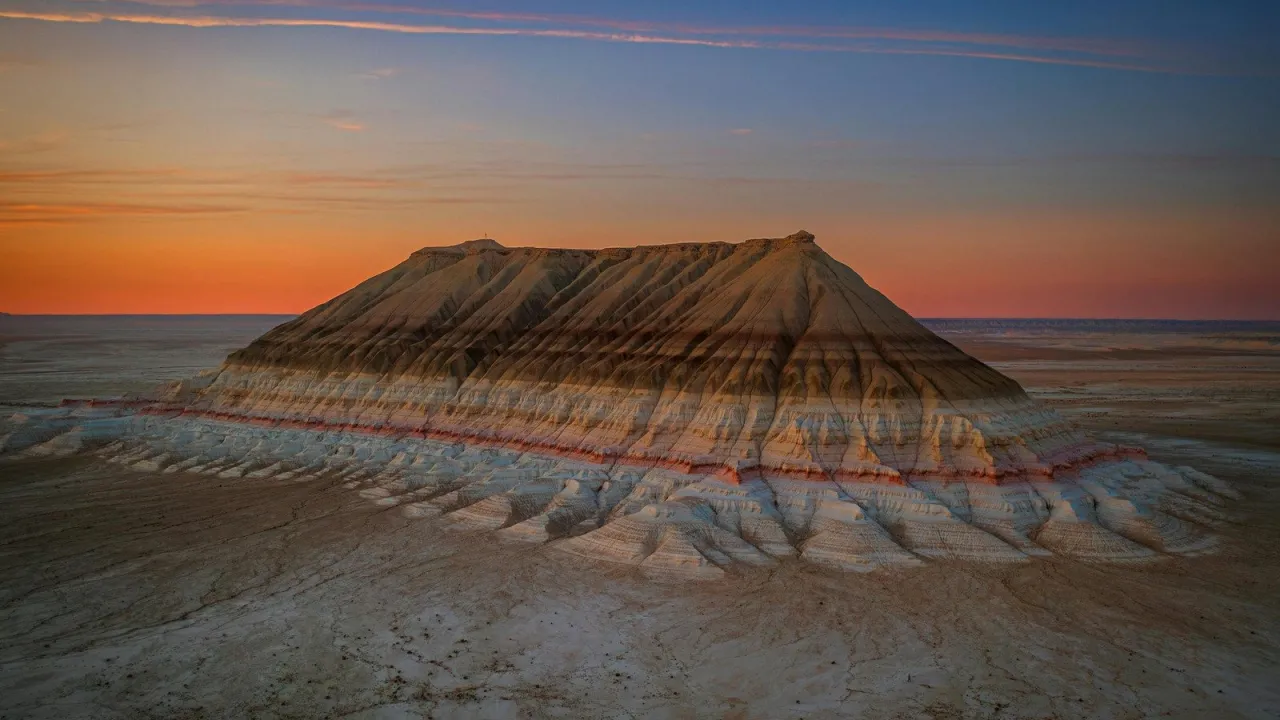
Far from the crowded tourist trails of Europe and the familiar holiday resorts of Asia, an extraordinary wilderness is waiting to be explored in western Kazakhstan. The Mangystau region, with its vast desert plains, surreal rock formations and dramatic geological landscapes, looks less like an ordinary travel destination and more like a forgotten world from another planet.
For adventurous travellers seeking something beyond conventional holidays, this remote corner of Central Asia offers an experience defined by isolation, discovery and breathtaking natural beauty. Its most spectacular attraction is Bozzhyra, a remarkable landscape on the Ustyurt Plateau where enormous white limestone cliffs rise above the desert like the ruins of an ancient civilisation. Some formations resemble giant fangs emerging from the earth, creating one of the most dramatic natural panoramas in Kazakhstan.
The journey to Bozzhyra is an adventure in itself. Located approximately 300 kilometres from Aktau, the area has traditionally required powerful four-wheel-drive vehicles, experienced local guides and careful planning. Travellers crossing the remote terrain encounter enormous stretches of desert, unusual rock formations and landscapes that seem to change colour as sunlight moves across the cliffs.
But Bozzhyra is only the beginning.
Another extraordinary attraction is the Torysh Valley, widely known as the Valley of Balls. Thousands of naturally formed spherical rock formations are scattered across the landscape, creating an almost mysterious geological spectacle. Some stones are small enough to hold in two hands, while others reach several metres in diameter. Their unusual shapes have fascinated visitors and researchers, making the valley one of the region's most unusual natural attractions.
For those seeking dramatic mountain scenery, Sherkala Mountain offers another unforgettable experience. Rising unexpectedly from the surrounding plains, this isolated limestone formation has a distinctive shape that resembles a resting lion from certain angles. Its towering slopes and rugged surroundings create an impressive setting for photography, exploration and guided hiking.
Adventure seekers can also discover the extraordinary Tuzbair Salt Flat, a vast white landscape surrounded by towering chalk cliffs. After rainfall, a thin layer of water can transform the salt surface into a giant natural mirror, reflecting the sky and surrounding mountains. The result is a surreal landscape that appears to stretch endlessly towards the horizon.
Beyond its geological wonders, Mangystau carries a remarkable cultural history. The region is home to ancient underground mosques and sacred sites carved into stone, some of which date back centuries. In July 2026, five sacred complexes known as the Rock Mosques and Associated Sacred Sites of Mangystau were added to UNESCO's World Heritage List, bringing international attention to the area's cultural importance.
The growing attraction of these extraordinary landscapes is now encouraging Kazakhstan to invest in tourism infrastructure. New visitor facilities, improved road access and planned glamping developments around Bozzhyra and Sherkala are part of a wider effort to make remote natural attractions more accessible. The developments are also expected to create opportunities for local communities and adventure tourism businesses.
However, the challenge will be balancing tourism growth with environmental protection. Mangystau's fragile desert ecosystem cannot withstand uncontrolled development, excessive vehicle traffic or poorly managed waste. Responsible tourism, guided excursions and carefully planned visitor facilities will be essential to preserving its extraordinary landscapes.
Spring and autumn are generally considered the most comfortable seasons for exploring the region, as summer temperatures can become extremely high. Travellers are advised to arrange experienced local guides, suitable vehicles, sufficient drinking water and reliable navigation before entering remote desert areas.
As Kazakhstan works to introduce Mangystau to a wider international audience, its appeal lies in something increasingly difficult to find in modern tourism: the feeling of discovering a place that remains genuinely wild.
For explorers willing to travel beyond familiar destinations, this extraordinary wilderness offers more than beautiful scenery. It promises a journey into a landscape shaped by ancient oceans, geological forces and centuries of human history a spectacular adventure at the edge of the known world.