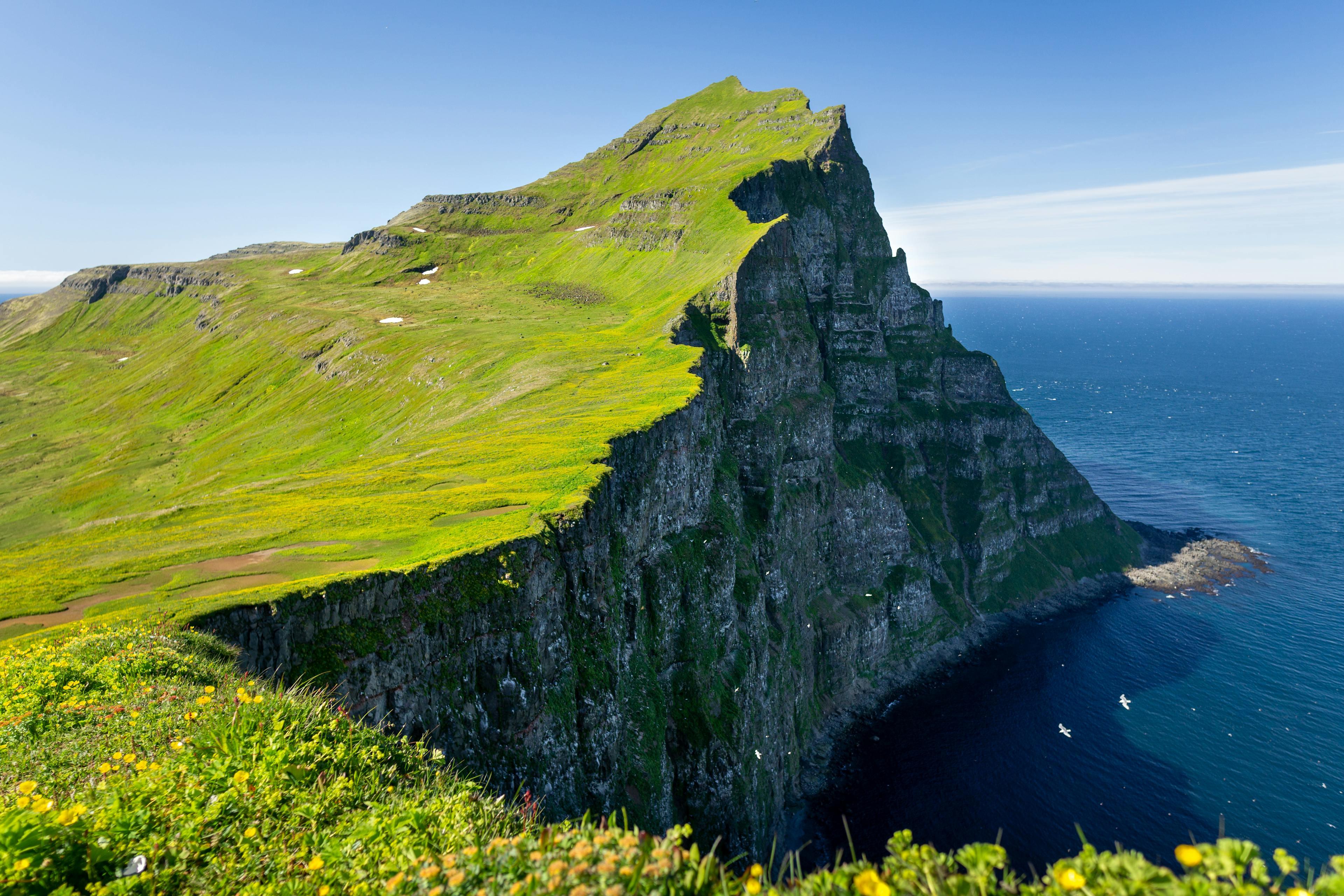
At the far northern edge of Iceland's remote Westfjords, there is a place where roads disappear, mobile phone signals become unreliable and the sounds of modern civilisation are replaced by crashing ocean waves and the cries of seabirds. This is Hornstrandir Nature Reserve, a breathtaking wilderness that remains one of Iceland's least explored adventure destinations.
Established as a protected nature reserve in 1975, Hornstrandir covers approximately 589 square kilometres of dramatic landscapes. Its remote valleys, towering mountains, isolated beaches and enormous coastal cliffs create an environment that feels almost untouched by the modern world. Remarkably, the region has had no permanent residents since the 1950s, when the last communities gradually abandoned their settlements.
For adventurous travellers, reaching Hornstrandir is an experience in itself. There are no roads leading into the reserve, and most visitors arrive by boat from the Westfjords town of Ísafjörður. Once ashore, exploration happens entirely on foot. There are no cars, buses or convenient shortcuts waiting along the trails. Every journey requires preparation, determination and a willingness to embrace the unpredictable Arctic environment.
One of the reserve's most spectacular natural landmarks is Hornbjarg, an enormous coastal cliff rising more than 500 metres above the North Atlantic Ocean. Its steep green slopes suddenly give way to dramatic vertical rock faces, creating a breathtaking landscape where thousands of seabirds gather during the breeding season. For hikers standing near its edge, the combination of powerful ocean winds, enormous cliffs and endless blue horizons delivers an unforgettable wilderness experience.
The adventure does not end with the scenery. Hornstrandir is also famous for its Arctic fox population. These remarkable animals, Iceland's only native terrestrial mammals, roam the protected landscape in search of birds, eggs and other natural food sources. Their presence makes the reserve particularly attractive to wildlife photographers and nature enthusiasts hoping to observe Arctic wildlife in its natural environment.
Another fascinating destination within the reserve is Hesteyri, an abandoned settlement that offers a glimpse into Iceland's disappearing coastal communities. Once home to fishing and farming families, the village gradually emptied during the twentieth century. Today, its old buildings and quiet surroundings create an atmospheric reminder of the people who once struggled to survive in this isolated corner of the country.
For serious adventurers, multi-day trekking across Hornstrandir provides the ultimate challenge. Hiking routes connect remote bays, mountain passes and isolated valleys, allowing visitors to experience the region far beyond its accessible coastal areas. However, this is not an ordinary hiking destination. Dense fog can make navigation difficult, rivers may become dangerous after heavy rainfall, and snow can remain on higher ground even during summer.
The best opportunity to explore Hornstrandir generally comes during the summer months, when boat services operate and hiking conditions are relatively favourable. Even then, travellers must carry appropriate equipment, navigation tools, sufficient food and suitable clothing. Mobile coverage is limited, and visitors should never depend on their phones for navigation or emergency communication.
Protecting this fragile wilderness is equally important. Camping is permitted only at designated sites, and visitors must respect wildlife, particularly Arctic fox dens. The reserve's natural beauty depends on responsible tourism and leaving its delicate environment undisturbed.
Hornstrandir is not a destination for travellers searching for luxury resorts, busy restaurants or comfortable sightseeing routes. It is a place for those who want to experience nature in its rawest form. Here, adventure means crossing unfamiliar valleys, watching seabirds circle above enormous cliffs and discovering landscapes that have remained largely unchanged for generations.
In a world where almost every destination seems connected to modern tourism, Hornstrandir offers something increasingly rare: the opportunity to disappear into the wilderness and experience the true power of nature. For explorers willing to travel beyond Iceland's familiar attractions, this forgotten Arctic frontier may become the adventure of a lifetime.